
Implantology
A titanium screw in place of the missing root, with a crown on top
A titanium screw is placed in the jaw in place of the missing root, and a crown is fitted once it has integrated with the bone. Surgery is planned from a 3D scan.
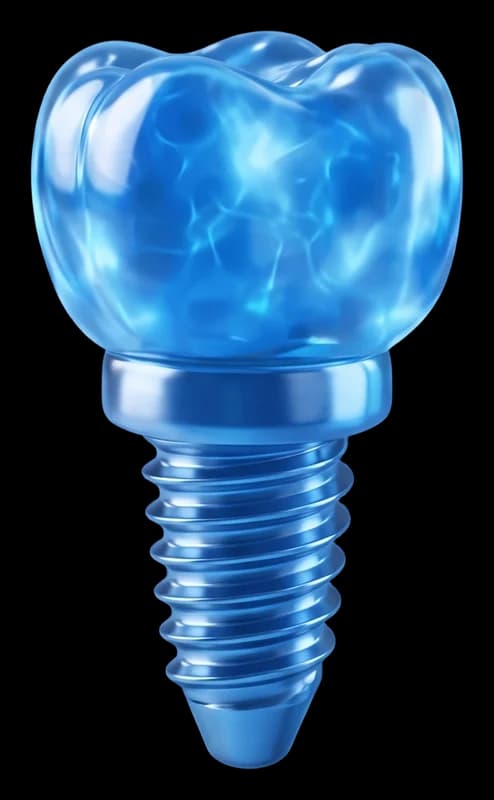
An implant is a titanium post that replaces the root of a missing tooth. Once it has integrated with the jawbone, a custom crown is fitted on top.
Planning is done from a 3D scan: bone volume, nerve position and the roots of neighbouring teeth are assessed in advance. Where it is indicated, a surgical guide is used.
What separates an implant from a bridge is that it fills a single gap without touching the teeth either side. With proper care it lasts many years.
Who is it for?
- One or several missing teeth
- Anyone unwilling to have neighbouring teeth cut for a bridge
- People unhappy with a removable denture
How the treatment works
- 01
3D imaging
Bone volume and the position of nerves and sinuses are measured.
- 02
Surgery
The implant is placed according to the scan-based plan, using a surgical guide where needed.
- 03
Integration
A temporary is worn while the implant integrates with bone.
- 04
Final crown
A ceramic crown is made to match the neighbouring teeth.
After your treatment
Cold compresses in the first 48 hours reduce swelling. Smoking markedly delays healing and is best stopped while the implant integrates.
Frequently asked questions
Is the procedure painful?
Because it is done under local anaesthetic, you usually feel no pain during the procedure. Tenderness for a few days afterwards is normal and is managed with painkillers.
How long does the whole process take?
The surgery itself usually takes under an hour. Integration with the bone then takes between two and six months depending on the person and the jaw, and is usually shorter in the lower jaw.
Is everyone a candidate?
If bone volume is insufficient, grafting may be needed first. Uncontrolled diabetes and heavy smoking affect healing; both are assessed at the consultation.
Implantology
Book an AppointmentOther treatments
- Aesthetic dentistry
- Orthodontics
- Whitening
- Surgical dentistry
- Porcelain laminate veneers
- Aesthetic fillings & bonding
- Zirconium crowns & bridges
- Dental prosthetics
- Endodontics (root canal)
- Periodontics
- Gum aesthetics
- Children's dentistry
- Tooth extraction
- Bone grafting
- Sinus lifting
- All-on-4 implants
- All-on-6 implants