Orthodontics
Aligning teeth with clear aligners or fixed braces
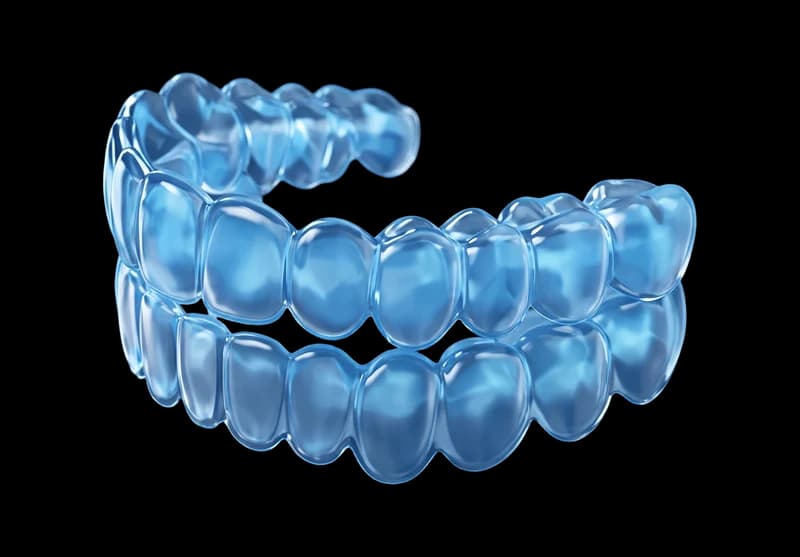
Crowding and bite problems are corrected with clear aligners or fixed braces; treatment time depends on the case.
Orthodontics is not only about appearance. A bite that does not meet correctly can affect chewing, gum health and, over time, the jaw joint.
The plan is built from impressions and X-rays. With clear aligners, where each tooth moves and in what order is shown digitally in advance, so you know what to expect throughout.
Clear aligners are the least disruptive option for daily life. For more complex cases fixed braces give a more predictable result; we decide together at the consultation.
Who is it for?
- Crowded or rotated teeth
- A bite that does not meet, or difficulty chewing
- Teeth that shifted back after earlier treatment
How the treatment works
- 01
Examination and X-ray
Bite, root positions and jaw relationship are assessed.
- 02
Digital simulation
You are shown where each tooth moves, and in what order.
- 03
Active treatment
Movement begins with an aligner series or fixed braces.
- 04
Retention
The result is held with a fixed or removable retainer.
After your treatment
Wearing aligners 20-22 hours a day keeps treatment on schedule. Once it ends, wearing your retainer for as long as your dentist advises is the most important factor in keeping the result.
Frequently asked questions
Am I too old for orthodontics?
No. Teeth can be moved at any age provided the gums and supporting bone are healthy.
How long must I wear aligners each day?
20-22 hours a day. Keeping them in except for eating and brushing is what keeps treatment on schedule.
Will my teeth shift back afterwards?
They can, without retention. A fixed or removable retainer is provided at the end of treatment, and used regularly it holds the result.
Orthodontics
Book an AppointmentOther treatments
- Aesthetic dentistry
- Implantology
- Whitening
- Surgical dentistry
- Porcelain laminate veneers
- Aesthetic fillings & bonding
- Zirconium crowns & bridges
- Dental prosthetics
- Endodontics (root canal)
- Periodontics
- Gum aesthetics
- Children's dentistry
- Tooth extraction
- Bone grafting
- Sinus lifting
- All-on-4 implants
- All-on-6 implants